- -15%
- New
PURPOSE. POSSIBILITY. PROGRESS.
Research peptide
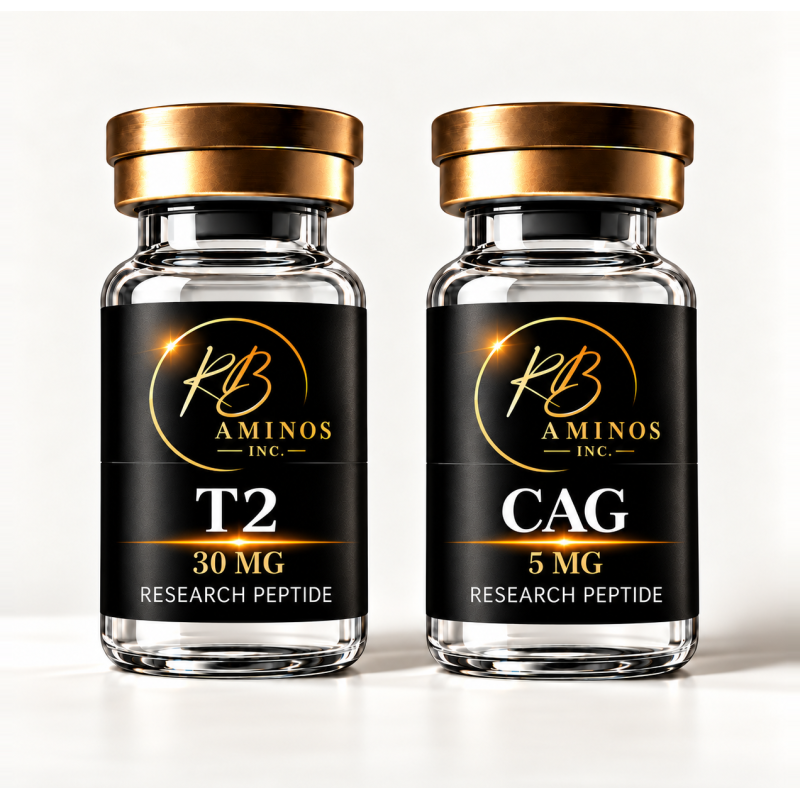
T2 30MG
CAG 5MG

Certificate of Analysis (COA)

Disclaimer

Delivery & Returns

Secure Payments
💉 T2 — Research Peptide
T2 is a synthetic research peptide developed as a dual GIP and GLP-1 receptor agonist, studied for its potential role in glucose metabolism, weight regulation, and metabolic optimization.
Research Focus & Mechanism
• Dual receptor activation:
o GIP (Glucose-Dependent Insulinotropic Polypeptide): Investigated for enhancing insulin sensitivity and fat metabolism
o GLP-1 (Glucagon-Like Peptide-1): Studied for slowing gastric emptying, reducing appetite, and supporting glycemic control
• Together, these pathways are explored for their synergistic effects on metabolic regulation, body composition, and energy balance
Research Insights
• Preclinical and clinical research shows T2 may significantly improve glucose tolerance and reduce body fat mass
• Studied for potential benefits in obesity, insulin resistance, and cardiovascular health research models
• Demonstrated enhanced weight reduction and metabolic efficiency compared to single-agonist peptides like semaglutide
Potential Research Applications
• Metabolic optimization and weight management models
• Glucose and insulin regulation research
• Peptide synergy studies with compounds like AOD-9604, Cagrilintide, or Retatrutide
🔍 Cagrilintide — Research Peptide
Cagrilintide is a synthetic research peptide and a long acting analogue of the hormone amylin. It has been developed to investigate pathways of appetite, satiety, energy balance, and metabolic regulation.
Research Focus & Mechanism
• It mimics endogenous amylin (islet amyloid polypeptide), which is secreted by pancreatic β cells along with insulin and plays a role in regulating food intake and gastric emptying.
• Cagrilintide is modified for extended half life (due to fatty acid chain linking etc) so that it can serve in once weekly dosing models in research.
• Through activation of the amylin receptor (and via cross activation of calcitonin receptors) it is studied for:
o increasing satiety / reducing appetite
o slowing gastric emptying
o influencing caloric intake, energy expenditure, and weight/fat mass in metabolic models
o potential synergy with GLP 1 receptor agonists in weight management research.
⚠️ Disclaimer:
T3 and CAG are intended for laboratory research purposes only.
It is not approved for human use, consumption, or medical treatment.